Long Term Effects of Research Misconduct
Taking Apart “The Mind of the Con Man”
Case:
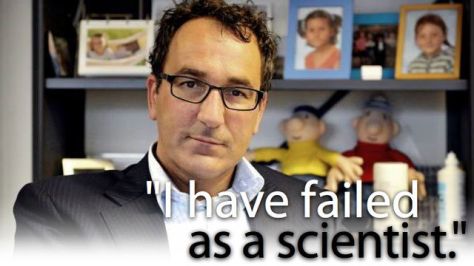
In spring of 2011, Dutch social psychologist Diederik Stapel committed an academic fraud by inventing studies that told the world what it wanted to hear about human nature. Said researcher published a widely publicized study in science about an experiment done at the Utrecht train station showing that a trash filled environment tended to bring out racist tendencies in individuals. It says in the paper that the experiment was conducted by inviting caucasian volunteers to fill out a questionnaire in a seat among a row of six chairs. The row was empty except for the first chair, which was to be occupied by a person of colour or another caucasian. It was claimed by Stapel and his co-author that the caucasian volunteers tended to sit farther away from the persons of colour when the surrounding area was strewn with garbage. The researcher observed the people streaming on and off the platforms during rush hour; Stapel could not find a location that matched the conditions described in his experiment.
Retrieved from: archives.nytimes.com
This fraudulent act of the Dutch social psychologist had not been made known to other researchers. These researchers are comprised of masters and graduate students, many of which have used Stapel’s study as reference to their own. Stapel, upon confrontation, admitted that he published more than 10 fabricated papers. Rumors of fraud trailed Stapel from Groningen to Tilburg, but none raised enough suspicion to prompt investigation. Stapel’s atypical practice of collecting data for his graduate students wasn’t questioned, either. Then, in the spring of 2010, a graduate student noticed anomalies in three experiments Stapel had run for him. When asked for the raw data, Stapel initially said he no longer had it.
Another Case:
“Ann Naive, a school counselor, wanted to “test out” her hypothesis that poor study habits were caused by aggressive tendencies. She asked junior high school students who were sent to the guidance office for fighting on the playground if they liked to study and how much time they spent studying. Twenty-three out of 31 students said that they did not like to study, and most of the children studied less than 3 hours a week. She therefore concluded that her hypothesis had proved to be fact.”
Retrieved from https://ethicsresearchcore.org/education/case-studies/jumping-to-conclusions/
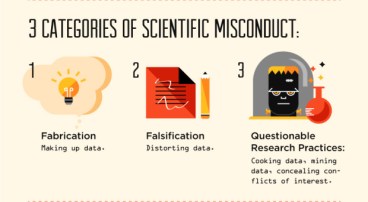
Fabrication and falsification are two examples research misconducts. The former is the action of making up data and reporting them while the latter is manipulating and changing data results. Both are contributors to unethical research procedures.
Fabrication as a practice of misconduct has been causing damages for the science institution, and misuse of public and government matters (Sinaga 2015). In Case Number One, which is Diederik Stapel’s case, data were made up in his claimed study about human nature. He conducted an experiment that was based only on his visualization or the way he pictured things out. He invited his respondents in his desired location. However, Stapel did not find a match to his location described to his study. Many of his co-researchers used his study as a reference without knowing that it is fabricated. Of course, this caused a streak of incomplete and incorrect collection of data that no one can really use in their studies since it would only contribute to the already present misconduct. Finelli (2009) stated that fabrication is done to improve outcome. Stapel did this in order to claim his study as truth and to prove and meet his objectives. On the other hand, Case Number Two is about Jumping to Conclusions without having further and deeper analysis to the context. The term “jumping to conclusions” is derived from the act of skipping the lengthy process of the research and instead “jumping” over to the last part of the study which would be the conclusion. According to Sinaga (2015), using falsification will drive researchers to subvert the hypothesis
Jumping to conclusions without factual evidences to support the claims will only make the research less plausible for it has no accurate data.
Research Misconduct/unethical research practices could create a domino effect that can produce bigger problems.
Fabrication and Falsification as misconducts will influence the public: (Tindermans, 2007)
- Producing harm to the Society through unsafe products or processes
- Creating damage to Science because of its false results
- Creating degradation of trust and relations between researchers and institutions
- Creating untrust sense to Science because of the decreasing public trust since it can promote declination to the credibility of one’s study that would be a help of a Society
Sinaga (2015) explained that Fabrication and Falsification is hard to determine and people barely know its prevalence. It has been made in researches particularly and should be taken action by research administration. They must have the capability to verify, control, and audit through internal regulation that could ensure every conducted study has high integrity results.
Research misconduct and continuation of unethical research practices leave long lasting effects on both the doer of the misconduct and on the study itself. Research misconduct is deceitful information that misleads people. It may also cause damage to other researchers’ studies if and when they decide to use such faulty data for their own research papers as reference. This following through and using false information produced by the author unbeknownst to the researcher can cause a domino effect in the community. Practicing proper research practices requires time and patience because when a researcher decides to skip the process and jump to the conclusion straight away, that, in itself, is already a research misconduct.
 In the context of our study which is a content analysis on Filipino films that have portrayals of mental illnesses, should the process of conducting an ethical research be neglected, our study may very well endanger the director’s reputation. An example would be that the director could have meant well and had done appropriately in the portrayal of the mentally ill character, but in our rushing of the process and utter neglect for the procedure, we could have published our study knowing that it is fabricated and falsified. Should a fraudulent output such as that which is exemplified in the example aforementioned be discovered and used by an audience of fellow researchers or academic advisers, then none of the studies conducted and/or that will be conducted would be deemed reliable and accurate.
Sources:

 Research Misconduct